Symmetric or asymmetric floodlight: which beam for the job
The same head is offered with two optics and the difference is not brightness. It is where the light stops.
Two optics, one head
A symmetric optic spreads the output in a cone, evenly in every direction from the centre. An asymmetric optic puts the same output into a shape with a hard cut along the top, so the light lands where the work is and stops before it reaches what sits behind it.
The heads on this line run from 200 W to 1500 W at 150 lm/W and carry IP66, and the optic is chosen when the order is placed rather than on site. That is worth knowing before the quotation, because the two versions share a housing and differ in where the light goes.
The cut is the feature
The top cut is what makes the asymmetric version worth asking for. A light aimed at a work face also aims at the windows behind it, the carriageway beyond it and the sky above it, and the cut takes all three out of the beam without dimming the face the job is about.
The second effect is on the crew. A head with a hard top edge is one that people can stand behind without looking into it, which matters on a shift where the same crew works the whole night in the same place.
The jobs each beam suits
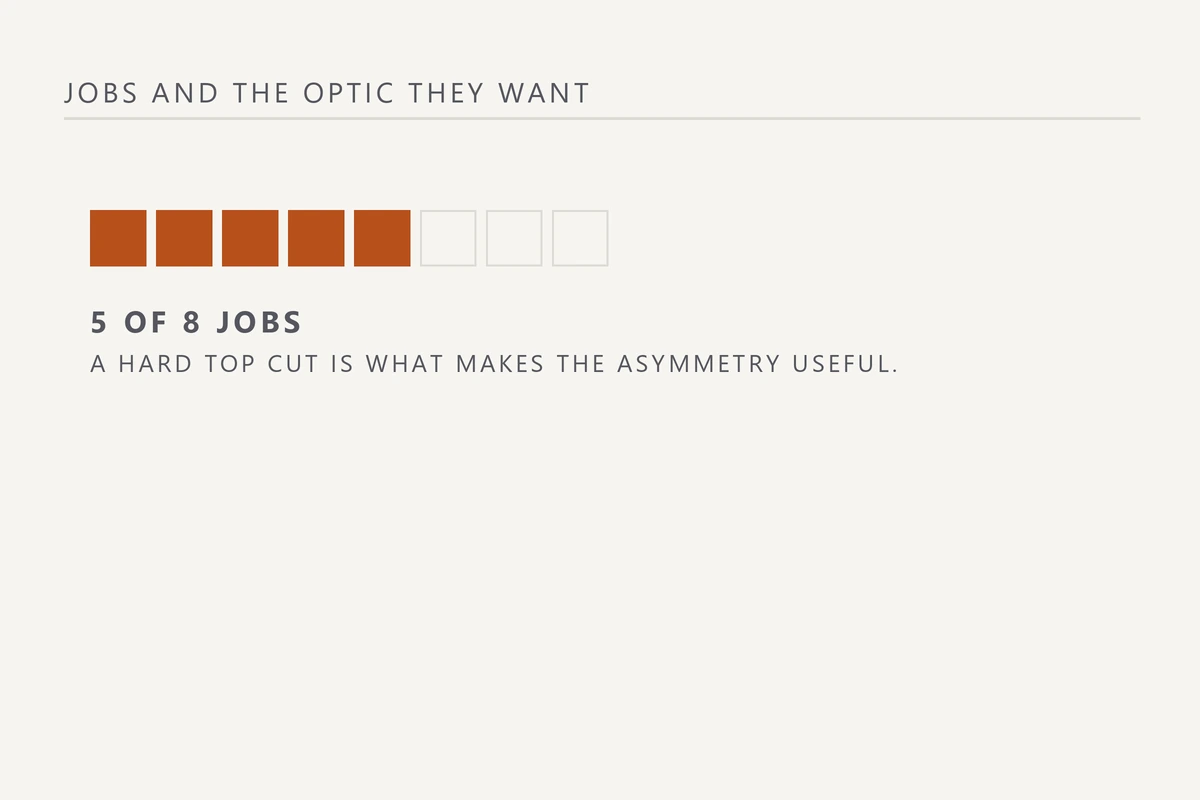
The five asymmetric jobs are the ones where a face has to be lit and something behind it must stay dark. The three symmetric jobs are the ones where people move through the lit area and would be working in the shadow of a cut.
| Job | Beam | Why |
|---|---|---|
| Sign face at a yard entrance | Asymmetric | The light stops at the top of the sign |
| Loading bay doors | Asymmetric | Keeps the beam off the cab and the neighbour |
| Trench along a footpath | Asymmetric | A long narrow face, no spill into gardens |
| Bridge deck soffit | Asymmetric | The cut keeps light off the parapet and the road |
| Rail work beside a live line | Asymmetric | The beam stops short of the track |
| Compound or yard | Symmetric | The whole area has to be lit, not one face |
| Emergency scene | Symmetric | People walk through it from every side |
| Night pour, wide slab | Symmetric | The work moves, so the light has to move with it |
The table is a starting point rather than a rule. The same job on a different site changes with the height of the mount and the distance to whatever the light must not reach, which is why the next section matters more than the table.
Height and aim decide more than the optic
A beam is a shape in space, so the height it is thrown from decides the shape on the ground. Up to about 500 W the head rides a 2.0 or 2.8 m tripod. Above that the mount changes to a 4.8 m mast rated for 40 kg, or a 3.8 or 4.0 m mast rated for 80 kg with a two person lift, and the aim point moves up with it.
Aim before the mast goes up rather than after. The two things to fix are the point the middle of the beam lands on and the line the top cut makes, and both are easier to judge from the ground with the head at working height than at the top of a mast in the dark.
What to ask for
- The photometric file for the exact optic, not for the family it belongs to.
- The aim point and the mounting height on the drawing, in metres.
- The surface the light must not reach, named, so the cut can be checked against it.
- The spill limit the site or the local authority applies, where one exists.
- The mount rating against the head, because the aim is worth nothing if the mast moves.
The first item is the one that settles an argument later. A photometric file shows the beam in two planes, so the cut becomes a drawing rather than a description from a sales call.
Where the balloon still wins
A floodlight, symmetric or not, is a source that can be seen. A balloon light is a surface that glows, so an area is lit without a point to look into and the crew can work facing it. Where the job is people moving through a space rather than a face that needs a defined edge, the balloon is the better tool.
The two lines share the tripods and the masts, so a fleet can carry a balloon head for the compound and a floodlight head for the sign face and swap them by the job rather than by the site.
Choose the optic for what the light must not touch. Brightness is the part every supplier can quote, and the cut is the part that decides whether a site is workable.
Updated 2026-10-28 · 4 min read. Specifications change without notice; confirm the current sheet before you publish a claim or write a tender document.
Questions that come back
Short answers, before the email.
Is an asymmetric floodlight dimmer?
No. The same output is shaped rather than spread, so the face at the aim point is lit at the same level and the light that used to go past it does not.
Can the optic be changed after the order?
Treat it as a different product. The optic is part of the head and the photometric file is issued for the version that was built.
Which beam suits a compound?
Symmetric. A compound is an area people walk through, and a beam with a hard cut leaves the part behind the cut dark.
How high should the head go?
As high as the mount allows and as low as the aim needs. Height widens the footprint and softens the cut, so the aim point and the mount are decided together.
Does a balloon light do the same job?
It lights an area without a point to look into, which suits work faces that people move through. A floodlight wins where the light has to stop at an edge.
Send the site, get the configuration.
Head, mount, power and the specification sheet for each line item, in one reply.